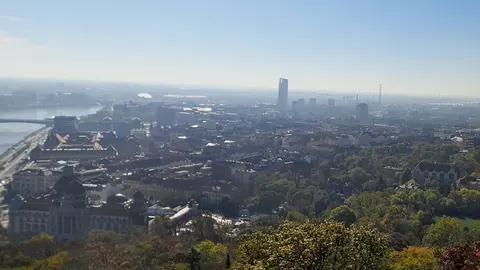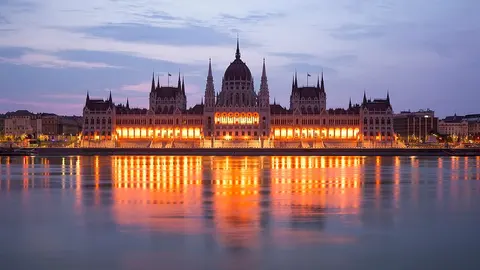
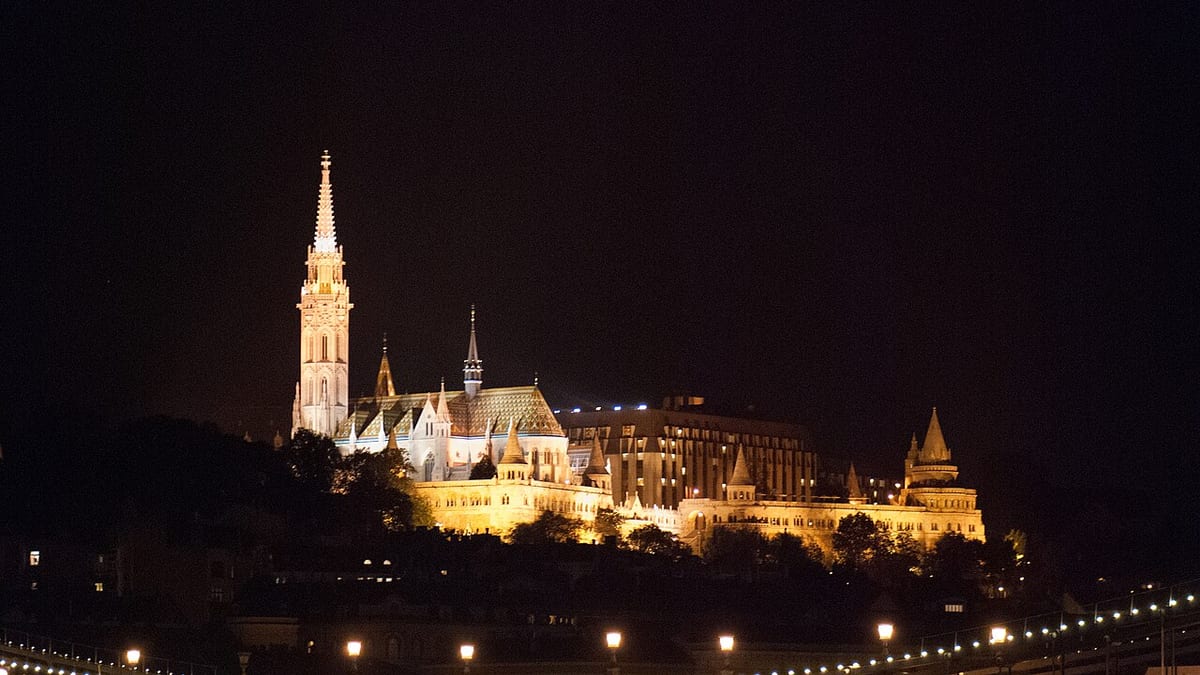
Budapest100 is worth planning around when you want to see buildings and residential spaces that are not ordinary year-round attractions. Use the programme for the correct edition and reserve activities that require booking. The 2026 festival took place in May; it is not an event you can still attend in autumn, and the next edition's exact public programme should not be invented from last year's listings. [1][2][3]
Start with the edition, not an archived address
The 2026 Budapest100 programme ran from 8 to 10 May, with the main building visits on 9 and 10 May. Those dates describe a completed event. An appealing building page from that programme remains useful background, but it does not establish that the property is open to visitors on an ordinary weekend. [1][2]
As of this article's publication, the next festival's detailed dates and building programme had not been verified. An October 2026 municipal article indicated that the next theme was expected to be announced in early December. That is an announcement timetable, not a confirmed visitor itinerary. Do not reserve travel around a guessed weekend presented as an official date. [4]
The distinction is especially important because Budapest100's archive can look like a ready-made sightseeing list. A building may have participated in an earlier edition under a specific agreement with residents or an owner. Its inclusion in the archive is not a standing invitation to enter.
Use archived material to understand the kind of architecture and stories the festival explores. Use the current edition's programme to decide where you can actually go, when you can enter and whether a reservation is needed.
What makes the festival different from a normal walk
Budapest100 brings attention to buildings through their residents, histories and everyday uses, rather than treating the city solely as a collection of monumental attractions. The programme can include visits, talks and walks, with each activity carrying its own conditions. The official visitor information is therefore more useful than a generic statement that "everything is open." [1][2]
For a visitor, the attraction is often the connection between a street façade and what lies behind it: a courtyard, shared space or story that would otherwise be missed. That does not mean every building offers access to private apartments or every floor. Read the description of the particular activity.
A festival visit also differs from a museum with a permanent visitor route. The space may still be someone's home or workplace, and the programme may rely on residents and volunteers. Arrive with the expectations of an invited guest, not with an assumption that every door is part of a public exhibition.
Free admission does not remove booking requirements
The festival's building programme is generally free, but selected activities have limited capacity and require registration. A free place is still a place that must be obtained through the organizer's stated process. Marking an event as interesting on a social platform is not the same as receiving the required reservation. [2]
Read the event page for the opening of registration, the number of places, the meeting point and any cancellation instructions. If you cannot use a reserved place, release it through the appropriate channel when possible. This matters particularly for small spaces where a handful of unused bookings can prevent others from attending.
Do not assume that every activity associated with the Budapest100 name follows the same financial model. The organization also holds activities outside the main festival, including fundraising walks. An October 2026 account describes such support events; that does not turn them into free festival building visits or make their dates applicable to another month. [3][4]
When comparing options, separate the main festival programme from year-round or fundraising activities. Both may be worthwhile, but they answer different questions about price, timing and access.
Choose fewer buildings and understand them better
A practical festival day starts with one or two activities you most want to attend, especially if they have fixed times. Add nearby open-access opportunities around them rather than selecting buildings scattered across the city simply because their photographs are attractive.
Allow time for entry procedures, orientation and conversation. A small courtyard can take longer to visit than its dimensions suggest when the value lies in a talk or resident explanation. Conversely, a large building may offer only a short defined route. The event description is a better guide than the building's size.
For back-to-back reservations, include travel and a realistic margin between the advertised finish of one activity and the start of the next. Do not assume a volunteer-led visit will operate like a tightly timed airport transfer. A looser schedule also leaves room to engage with the material rather than watching the clock throughout.
Keep a nearby alternative that does not require a reservation. It is useful if an event is full or a building's access changes, but it should remain an option rather than another obligation added to an already crowded day.
Language affects the experience
Check the language of each guided activity. A building can be visually interesting without a detailed explanation, but a talk centered on residents' stories may offer much less to someone who cannot follow the language. The official programme and visitor information should be used to identify any English-language or otherwise suitable options. [1][2]
Do not assume that every volunteer can provide a parallel translation on request. Where a visit is principally self-guided, written materials may be more useful; where it is built around a discussion, a language mismatch can change the experience substantially.
For a mixed-language group, choose activities whose format works for everyone. A shorter architectural visit followed by your own discussion may be more satisfying than a long talk that leaves part of the group unable to participate.
Access and privacy are building-specific
Historic or residential settings can involve steps, narrow passages or other constraints. Ask about the precise route when step-free access is important. A building being included in a public programme does not establish that every advertised space is accessible to every visitor.
Follow the instructions about photography, restricted areas and movement through shared spaces. Avoid photographing residents or private interiors without permission. An open courtyard is not permission to try apartment doors or explore beyond the marked route.
Keep the visit considerate in other practical ways: do not block entrances, leave belongings in circulation areas or bring a large group into a space intended for a small activity. These are recommendations for respectful participation, not a claim that every building publishes identical rules.
What to do outside festival dates
Outside the main event, start with the organization's current calendar rather than assuming the annual programme continues. A listed walk or special event may provide a useful introduction, but its own ticketing and access conditions apply. [3]
The archive can still enrich an independent street walk. Read the history of a building, view its exterior from public space and connect it with the surrounding area. Keep the distinction clear: learning about a property is not the same as being entitled to enter it.
Budapest100 is most rewarding when approached as a specific invitation to understand the city's buildings and communities. Choose the correct edition, secure any necessary place, respect the boundaries of the visit and leave enough time to listen. That produces a more meaningful day than turning an old programme into an unauthorized checklist.