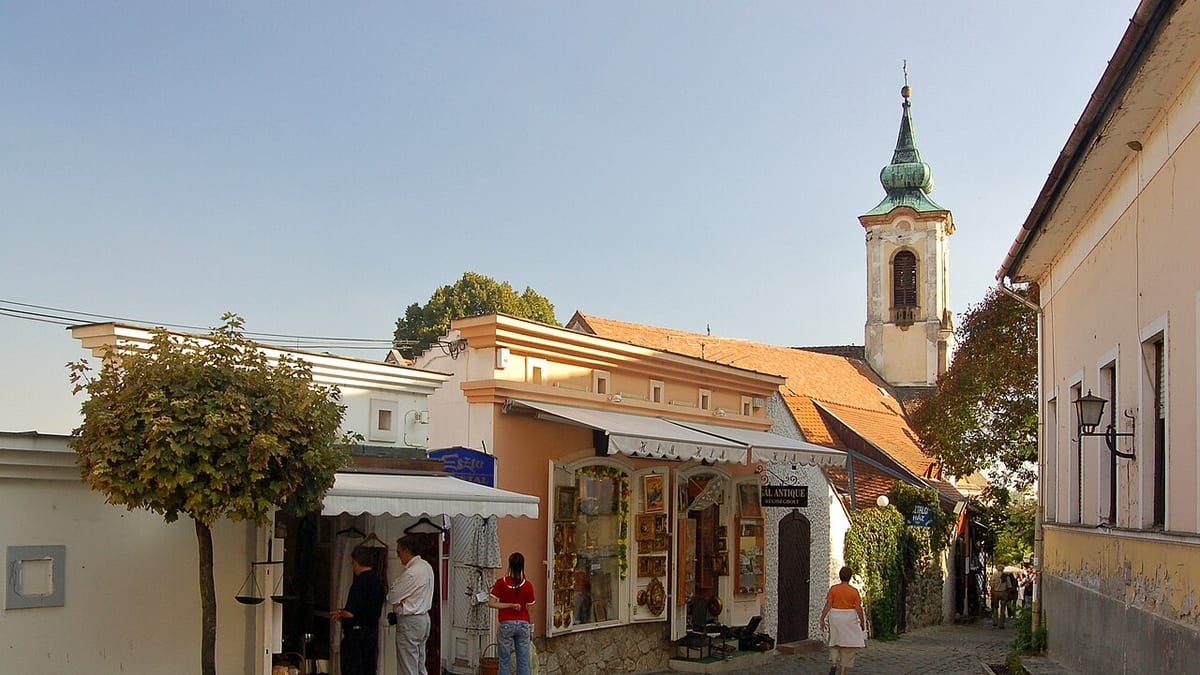
Visit Szentendre independently when you want a flexible day of galleries, cafés and riverside walking. Choose a guided excursion when interpretation and coordinated transport matter more than lingering, and a wider Danube Bend tour only when the other towns are genuinely priorities. Most importantly, do not confuse a guided walk with museum admission or a seasonal boat return with a year-round guarantee. [1][2]
Decide whether Szentendre is the destination or one stop
The first choice is between a focused Szentendre outing and a broader Danube Bend excursion. They can sound similar in search results because both mention the town, but they allocate your day very differently.
A focused excursion gives the guide time to introduce Szentendre and leaves you some opportunity to explore. A wider itinerary may also visit Esztergom and Visegrád, with more hours spent moving between places. Gray Line's Danube Bend tour is an example of that longer structure, with its own rules for meals, admissions and seasonal transport. [2]
More destinations do not automatically mean a better day. Choose the broader circuit when you genuinely want the different landscapes and historical settings. Choose Szentendre alone when your priorities are browsing art, understanding the town's cultural history or enjoying a relaxed lunch without watching the clock.
That distinction also helps when comparing prices. A four-hour visit and an eight- or nine-hour excursion are not like-for-like products, even before considering what they include. The relevant question is how much useful time each gives you in the places you care about.
What the classic guided half-day includes
The Cityrama/Gray Line Szentendre artists' village excursion, sold through Musement, describes a roughly four-hour outing with a guide, air-conditioned bus travel and a lángos tasting. Its listing distinguishes those inclusions from attraction admission, which is not included simply because the trip visits an artistic town. [1]
That is a sensible format for someone who wants an introduction without organizing the journey. The guide can provide context that would otherwise require separate reading, while the shared transport removes the need to manage tickets and connections for the outbound leg.
The limitations are equally important. A tasting is not necessarily a full lunch, and free time is not a ticket to every gallery or museum. Plan any extra spending around what is actually included. Do not assume that a photograph of an interior on a sales page proves that admission to that interior forms part of your selected package.
The return arrangement also needs attention. The advertised boat component is seasonal and may be replaced by road transport when the season, water conditions or operation requires it. Choose the excursion because the overall day appeals to you, not because you would regard a bus return as a failure of the trip. [1]
Before booking, read the meeting-point instructions and the cancellation conditions for the exact departure. A central departure is often convenient, but it is not automatically hotel pickup. The same brand can sell several excursions with different arrangements.
Independent travel gives you control over the useful hours
The H5 suburban railway is a practical basis for an independent visit. However, Szentendre is outside Budapest's municipal boundary: a normal Budapest travel entitlement does not automatically cover the whole journey beyond Békásmegyer. BKK publishes extension-ticket and dedicated suburban-tour-ticket options, with eligibility and coverage that need to match the city ticket or pass you already hold. [3][4]
Start with what you have already purchased. Someone holding a valid Budapest pass should compare the appropriate outer-section entitlement; someone without one needs a complete fare solution. Buying a second city product unnecessarily can erase the saving you expected from traveling independently.
Once the journey is organized, the principal advantage is flexibility. You can start with a museum, move lunch later, spend longer in a gallery or shorten the day when the weather turns. You are not paying for that freedom with a lack of structure: one or two booked activities can provide enough shape while leaving the rest open.
For a first independent visit, I would choose one substantial cultural stop and allow the town itself to fill the gaps. A sequence of small galleries can be enjoyable, but attempting every museum risks creating the same hurried itinerary you were trying to avoid by not joining a tour.
A local guide can be the best middle option
You do not have to choose between an unguided day and a coach from Budapest. Szentendre's tourism office offers information about locally arranged guided programmes, including cultural and religious heritage themes. Foreign-language arrangements should be confirmed for the particular guide and date rather than assumed from an English-language webpage. [5]
This creates a useful third model: travel independently, meet a local guide for a defined walk, then keep the afternoon free. It concentrates the guided element where it adds the most value and avoids spending the entire day on a group schedule.
The current Hungarian tourism-office information gives the Tourinform address as Dumtsa Jenő utca 22. Use the actual meeting address in the confirmation, especially when older directory entries or a different starting point appear in search results. An office address and a tour meeting point are not necessarily the same. [6]
For a family or small group, ask for the total guiding fee and what it covers. A shared local fee may compare favorably with several individual tour seats, but that cannot be established without a quote. Museum admission, special access and transport should each be identified separately.
Art activities need more than a town walk
An artists' town description can create the expectation of watching people work in every doorway. A better approach is to choose a specific gallery, studio or workshop and establish what kind of visit it offers.
Regentag Studio Gallery is one example of a venue whose creative activities can involve advance arrangements. A workshop booking is a different experience from walking into an exhibition, and its duration can determine how much of the day remains for other stops. [7]
Decide whether you want to look, learn or make something. Looking at a small exhibition may fit into a flexible walk; a guided cultural visit or creative workshop deserves protected time. An independent itinerary is particularly useful for the latter because you can arrange transport around the activity rather than trying to fit it into a coach group's free interval.
The same principle applies to the Skanzen open-air museum. Its published calendar distinguishes ordinary opening from specific late-season events and limited visiting days. It should not be added as an effortless year-round extra to a central Szentendre walk. The event date, opening format and travel between the two places all matter. [8]
Keep public boats and tour boats separate
A public boat service, a sightseeing cruise and the boat return included in a private excursion have separate calendars and ticket conditions. Szentendre's municipal shipping information is a useful starting point for the public-service side, but it does not amend the conditions of a coach-tour booking. [9]
For an independent boat journey, establish both directions before buying. A pleasant outward sailing is not enough if the last suitable return leaves before your planned museum visit ends. Conversely, a rail journey one way and a boat the other can be a worthwhile combination when the actual timetable supports it.
Late autumn and winter favor a simpler plan. Do not carry a summer boat itinerary forward merely because an undated guide describes it attractively. The town can still be the purpose of the day without turning the journey into a cruise.
Choose the format that protects your priorities
A guided half-day suits travelers who want an introduction and coordinated travel. Independent HÉV travel suits those who value flexible meal times, longer gallery visits and control over the return. A locally booked guide provides interpretation without surrendering the whole day, while a broader Danube Bend excursion is appropriate when Szentendre is deliberately only one part of the plan.
Compare the actual product, not the promise of "seeing everything." Check the named admissions, the amount of free time, the return transport and the activity that matters most to you. The best Szentendre tour is the one that leaves enough room for that priority rather than simply collecting the greatest number of place names.
Sources
- Musement / Cityrama: Szentendre artists' village guided tour
- Gray Line: Danube Bend excursion
- BKK: suburban railway extension ticket
- BKK: suburban railway tour ticket
- Szentendre tourism: group and guided programmes
- Szentendre tourism: Tourinform office
- Szentendre tourism: Regentag Studio Gallery
- Skanzen: opening calendar
- Szentendre municipality: shipping information