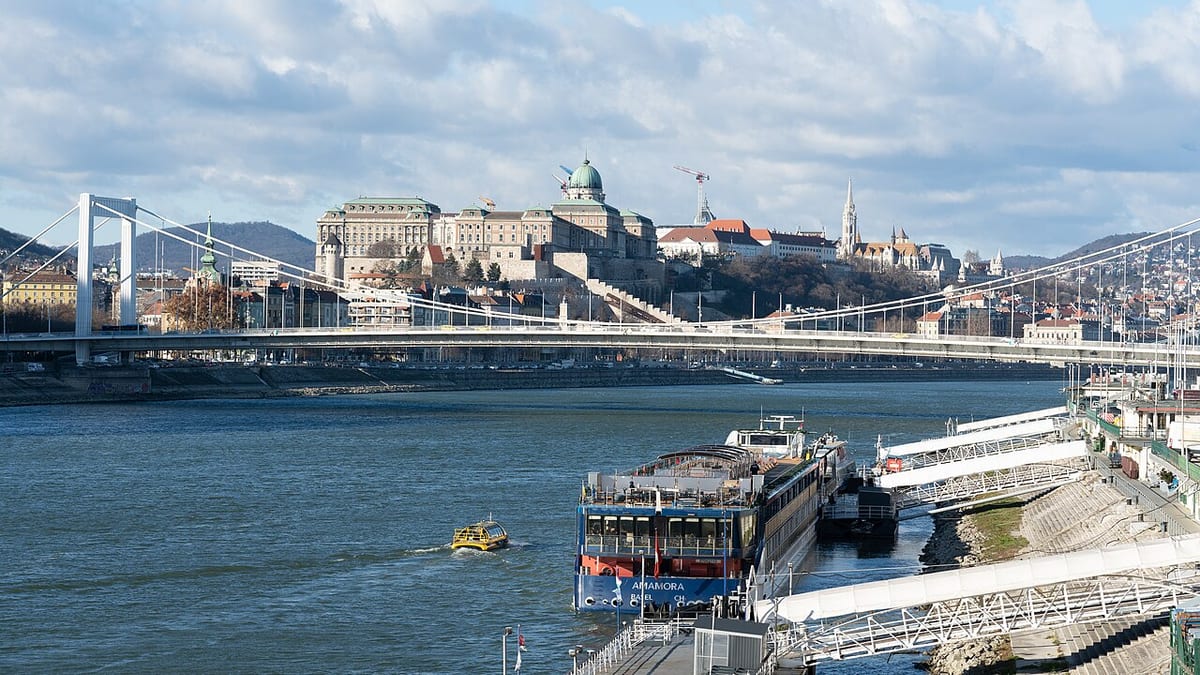
Budapest has several Danube boarding areas, not one cruise terminal. Start with the operator, riverbank, exact dock number and vessel shown on your confirmation. Legenda, for example, uses Vigadó Dock 7 on the Pest side, but that is not the departure point for every sightseeing boat or overnight cruise ship. A central riverside address without a dock number is incomplete. [1][2][4]
Read the bank and dock before choosing transport
The Danube separates Buda from Pest, and a boat visible across the water is not necessarily close by the route you can actually walk. A wrong-bank arrival can require a substantial detour to a bridge. Identify the bank first, then the embankment, pier and operator.
A dock number belongs to its named boarding area; it should not be treated as a citywide address on its own. Keep the written location from the booking alongside the map pin, especially when using a taxi or meeting another member of your party.
The operator's office can also be somewhere other than the ship's departure. Legal addresses, restaurant venues, ticket booths and boarding pontoons serve different functions. Use the specific joining instructions, not the first address displayed in a website footer.
For a cruise booked through an intermediary, find the actual boat operator in the confirmation. The reseller's attractive product title may say little about the operational meeting point. Save the original voucher and directions offline before leaving the hotel.
Vigadó is a cluster, not one interchangeable gangway
Legenda's directions identify Dock 7 at Vigadó tér and describe the approach from the central Pest side. Its published pedestrian instructions use the Vörösmarty tér area and the descent toward the quay. Those directions belong to Legenda's operation, not to every vessel moored nearby. [1][2][3]
The dock number remains important even when the riverfront looks compact. Nearby boats can offer similar sightseeing, dinner or evening-light cruises under different reservations. Boarding a vessel with a familiar-looking photograph or route description is not a substitute for matching the operator on your ticket.
MAHART PassNave also uses named Budapest landing places for its scheduled and excursion services. Read the particular product's departure and arrival details rather than assuming that a ticket sold under the MAHART name always uses the same Vigadó berth. [4]
Allow time at the riverfront to identify the correct check-in point. Arriving at the top of the embankment at the stated sailing time leaves no margin for descending, locating the boat and completing any ticket check. The right buffer is the one in your confirmation, not a universal number borrowed from another operator.
Other central operators may use a different quay
Silverline publishes its own departure instructions for services on the Pest bank. Follow that operator's current map and product confirmation rather than substituting Legenda's Dock 7 because both companies advertise central sightseeing cruises. Similar views do not imply a shared departure point. [6]
The same principle applies to dinner cruises, party boats and short sightseeing departures. A product can be sold as "Budapest Danube cruise" while requiring a different meeting point, vessel or reporting process. Compare those details before buying when you have a tight connection from another activity.
A restaurant boat that remains moored is also a different purchase from a sailing dinner cruise. Read whether the experience includes navigation, how long it lasts and where it ends. A glamorous boat interior in a photograph does not answer any of those operational questions.
For an evening outing, plan the return from the actual landing point rather than assuming you will disembark exactly where you started. A round trip often does return to its origin, but that should come from the selected itinerary, not a general expectation about cruise products.
Joining an overnight river cruise needs ship-specific instructions
The passenger-port network includes berths serving larger river vessels as well as local sightseeing services. MAHART Ports publishes Budapest port information, but your cruise company's final joining instructions should identify the ship and assigned berth for the day. [5]
Do not use a sightseeing pier list to predict where an overnight ship will dock. A hotel described as "near the Danube" may still be inconvenient for the actual berth. Book accommodation for a workable evening and a confirmed transfer rather than for the shortest distance to a generic river symbol.
Give a driver the vessel name, berth and a contact number, not simply "Budapest cruise terminal." Establish the road-accessible meeting point if vehicles cannot stop directly beside the gangway. A successful transfer ends where the passenger can reach the ship, not merely where the driver sees water.
Ask the cruise operator when luggage can be handed over and when cabins become available. Early arrival at the berth does not automatically grant immediate access to the room. A sightseeing plan before embarkation needs a real luggage arrangement rather than an assumption that the ship will store everything at any hour.
Airport and railway transfers should protect the sailing
Work backward from the required reporting time. Include the airport or railway arrival process, the city journey and the final approach to the dock. For a flight, baggage collection and any entry formalities occur before the road or public-transport transfer begins.
A published airport-to-center journey time is not a complete airport-to-ship estimate. The final walk, a change of vehicle and the correct river-level access can materially alter the total. Use BudapestGO for the actual dock area when considering public transport, then inspect the last walking section. [7]
For a high-value overnight cruise, arriving the previous day can reduce the consequences of a delayed flight. That is editorial risk-management advice, not a requirement imposed by every operator. A short sightseeing cruise can often be handled more flexibly, but any change still depends on the ticket conditions and available capacity.
On disembarkation, distinguish the ship's scheduled arrival from the time you can leave with luggage. Obtain the operator's departure procedure before booking a tight onward train or flight. There is no single transfer buffer suitable for every vessel, berth and connection.
A waterside location does not guarantee easy boarding
Central quays can involve stairs, ramps, road crossings and a further gangway onto the vessel. Legenda's ordinary pedestrian directions, for example, include stairs; travelers who cannot use them need a confirmed alternative approach rather than simply following the most prominent route description. [3]
Ask about the complete chain from street level to the seat and toilet you will use. A boat may have an accessible deck but a challenging gangway, or an easy entrance but no suitable route to another level. Water conditions can affect the gangway angle, so an old photograph is not a full access assessment.
Give the operator the dimensions and type of mobility equipment and explain whether steps or transfers are possible. The reply should concern the actual vessel and sailing, not only the company's fleet in general. Do not rely on an improvised lift by companions as a substitute for an agreed safe arrangement.
The strongest preparation is precise rather than complicated: identify the bank, dock, operator and vessel; follow the reporting instruction; and allow for the final approach. Once those details are settled, the river can be enjoyed for the perspective it offers on Budapest instead of becoming a search for the right boat at the last minute.