
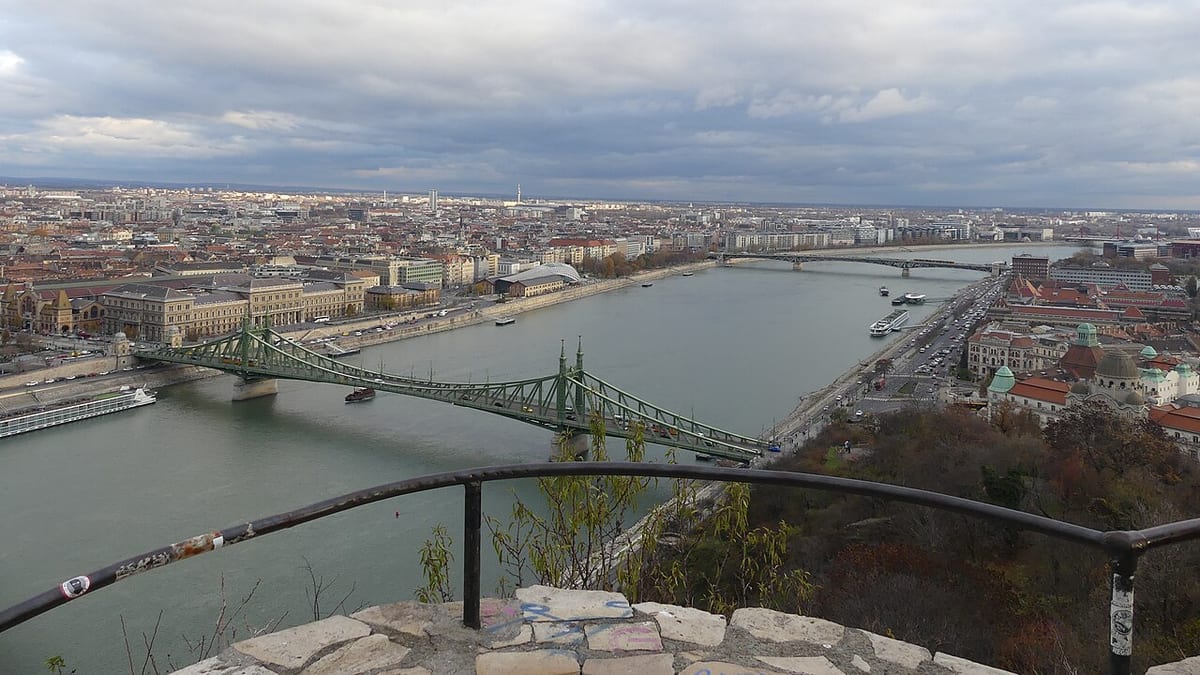
With a four-hour Budapest layover, stay at the airport. Six hours may allow a very brief city visit only when the arrival, entry requirements and return arrangements are unusually straightforward. Eight hours can support a compact central outing; twelve hours offers more flexibility. These are conservative planning recommendations, not promises that every passenger can complete the same route in the same time.
First establish whether you can leave the airport
A layover's advertised duration is the interval between scheduled flights, not free time in the city. You still need to leave the aircraft, complete any arrival formalities, reach transport, return to the airport and meet the next flight's check-in and boarding requirements. Separate tickets, checked luggage and a terminal-side change can alter the plan substantially.
Permission to transit through an airport is not necessarily permission to enter the country. Travelers subject to entry conditions should consult the responsible official guidance for their nationality and documents before planning a city visit. Do not infer eligibility from having an onward ticket or from another passenger's experience. [1]
Also establish what happens to your luggage. A checked bag transferred through on one itinerary creates a different task from a bag you must collect and check again. Ask the airline about the specific booking rather than assuming that every connection is handled in the same way.
The airport and airline's instructions for your departing flight take precedence over any sightseeing suggestion. Treat the published check-in, bag-drop and boarding deadlines as constraints, not targets to approach at the last possible minute. [2]
Use airport transport according to the ticket you have
BKK's 100E Airport Express links the airport with central Budapest and has its own fare arrangements. Do not assume that an ordinary city ticket or short-term travelcard automatically covers it. Consult the current airport-express information for the ticket required and any eligibility conditions attached to a supplementary fare. [3]
The alternative public-transport approach using the airport bus and metro involves a different route and ticketing decision. BKK's journey planning information is the correct place to compare the connection for your actual time of travel. A cheaper fare is not necessarily the better layover choice when it adds changes and reduces the time available in the city. [4]
For a tight connection, simplicity has value. Know where the return airport service departs before you start sightseeing, and save that location offline. The place where you get off an arriving service is not something to assume will automatically be your return boarding point without checking the route information.
A taxi or private transfer may reduce some navigation, but it does not remove traffic uncertainty. Choose it for the convenience it provides, not because an advertised driving time guarantees a particular airport arrival. Have a clear destination and an agreed fare arrangement before the journey begins.
Four hours: make the airport the plan
A four-hour connection does not provide a sensible independent city excursion once arrival and departure tasks are included. The better use of the time is to complete transfer formalities, find the next gate area and then choose food or a comfortable place to sit within the area available to you.
Avoid planning a token trip outside simply to say you visited Budapest. The effort of leaving, traveling and re-entering can consume the connection without providing a meaningful city experience. Remaining at the airport is a positive decision when it protects the onward journey and gives you time to eat and recover.
For a self-transfer, even the airport-only plan needs attention. Confirm when you can check in for the next flight and whether you must wait landside with your luggage. That is an airline-specific practical question, not a reason to assume the gap is available for sightseeing.
Six hours: a conditional visit, not a standard recommendation
With six hours, a city trip should depend on what actually happens after arrival. A delayed inbound flight, a slow entry process or an unexpected baggage task can eliminate the available margin. Decide after those uncertainties are resolved rather than treating a prepaid city activity as an obligation.
If everything is straightforward, keep the outing close to the airport service's central arrival area. Choose a short walk and one café or meal, not a timed museum, thermal bath or cross-river sightseeing circuit. The point is to enjoy a small part of the city without creating a second complicated journey before the flight.
Do not use this option when your documents, luggage or onward check-in arrangements remain unclear. The correct response to an uncertain return budget is to stay at the airport, not to make the city walk faster and hope the transport cooperates.
Eight hours: one compact central route
An eight-hour connection can create enough room for a modest visit, but the arithmetic should come before the itinerary. Consider an illustrative allowance of one hour to leave the airport, two hours for the combined outward and return transport, two and a half hours back at the airport before departure and half an hour of contingency. That leaves two hours for the city.
Those figures are planning assumptions, not measured queue times or official universal minimums. Substitute the airline's requirements and the actual transport information for your journey. The exercise is useful because it prevents "eight-hour layover" from quietly becoming "eight hours of sightseeing." [2] [3]
Use the city portion for a walk around the central arrival area, perhaps combining an exterior view of the basilica area with a short riverfront visit and a simple meal. Do not add a booked interior attraction unless the entry and exit fit comfortably inside the available window. A leisurely, coherent route is better than several taxi rides between landmarks.
Set the return departure time before leaving the airport. Treat it as the end of the outing, not the moment to start choosing a café for a final stop. Keep enough battery and mobile access to consult the transport information on the way back.
Twelve hours: more choice, still not a full holiday day
A twelve-hour connection can support a longer meal and one principal attraction, provided the flight times leave useful daytime hours. A twelve-hour overnight gap is not equivalent to twelve hours during normal museum and restaurant service. The sequence should follow the actual clock, not just the total duration.
Choose one main experience and keep the rest flexible. A museum visit, a carefully planned bath visit or a longer neighborhood walk can work better than attempting all three. A distant day trip is a poor match for an airport connection because it adds another transport system and another set of return risks.
When tiredness is the main issue, a rest period may be more valuable than a larger itinerary. You do not have to spend every available hour moving. The best Budapest layover is the one that delivers a worthwhile experience while leaving you comfortably ready for the flight that brought you there in the first place.