
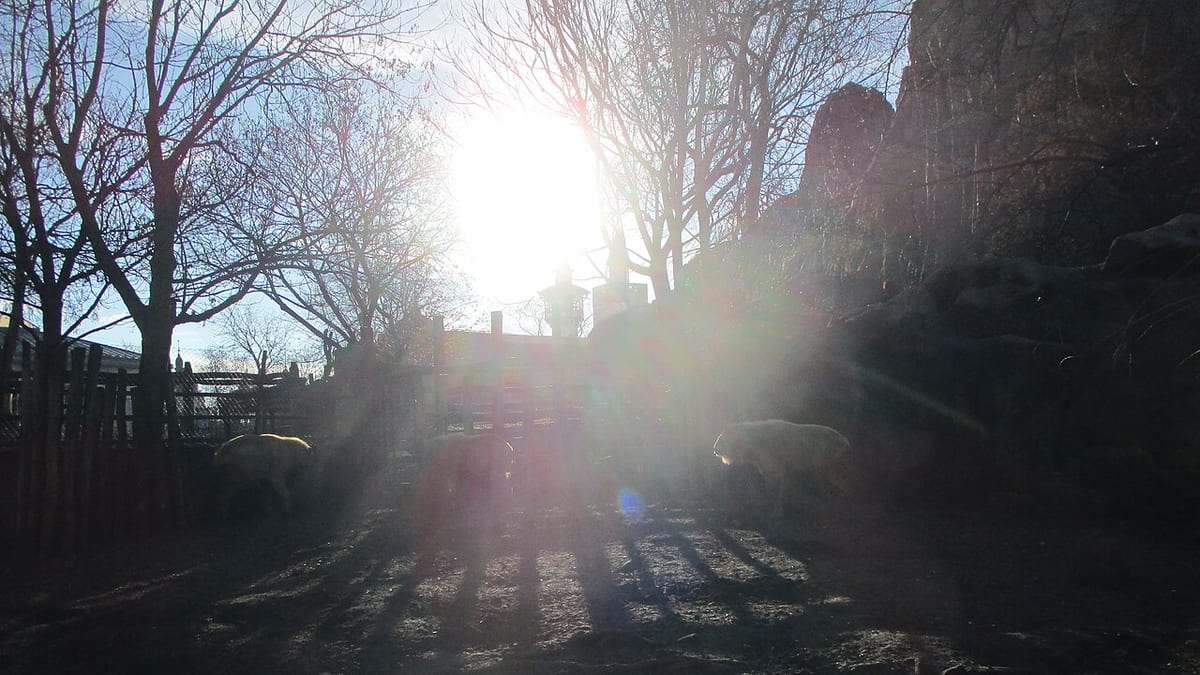
Budapest Zoo is worth visiting for travelers who want a substantial animal-focused outing in City Park, especially families willing to explore at a slower pace. Its Biodome opened on July 18, 2026 and is included in ordinary zoo admission, so older descriptions of it as an entirely unopened project are no longer a sufficient guide. Winter still brings a short visiting day. [2][3]
Give the zoo the best part of the day
The zoo's appeal combines living animal collections with a long-established urban setting. Its history dates to 1866, and the architecture is part of the identity rather than a neutral backdrop. That gives interested adults something to consider alongside the animals, without making the visit a substitute for a dedicated architecture tour. [4][5]
Choose a small number of animal or habitat priorities before arriving. Then allow the route to respond to what is actually happening. An animal that is resting or away from the viewing edge is not obliged to match the visitor's schedule; returning later can be more rewarding than waiting impatiently for a photograph.
With children, agree on one priority each rather than promising to see every named animal. Build in time for toilets, food and a quiet pause. These practical intervals are part of a successful family visit, not wasted time between attractions.
For a first outing, reserve most of a half-day as an editorial starting point, and longer if your family enjoys close observation or wants to explore the Biodome in depth. A short final-hour visit has a weaker value proposition because the admission price does not automatically shrink with the remaining time.
The Biodome changes the plan, but not every rule
The zoo states that the Biodome opened to the public on July 18, 2026 and that a valid zoo ticket covers it. Its visitor information directs guests through the permitted internal connection and describes the way admission is checked. Retain the ticket instead of treating it as disposable once you have entered the main zoo. [3]
This is a material update for travelers using older Budapest itineraries. At the same time, it does not justify assuming that every future event, special activity or restricted area under the Biodome name is automatically included. Read the product and current visitor instructions for any additional event you plan to attend.
Consider how much time you want to spend there before arriving. Adding a substantial indoor environment to an already full circuit can make the day feel rushed. It may be more sensible to shorten the rest of the animal route and enjoy the new space properly than to hurry through it simply to claim that everything was seen.
The distinction between admission and access remains important. A separate-looking external entrance is not necessarily the route allowed by your ticket. Follow the zoo's instructions and staff guidance rather than improvising a shortcut out of the grounds and expecting unrestricted re-entry. [3]
Family tickets can produce a meaningful saving
The current official price page lists adult admission at HUF5,900 and child admission at HUF4,200 for ages two to eighteen. The family product for two adults and two children is HUF17,500. A one-adult, two-child family product is HUF13,000. [1]
For two adults and two eligible children, four separate tickets would total HUF20,200. The listed family ticket is therefore HUF2,700 cheaper. For one adult and two eligible children, separate tickets total HUF14,300, so the relevant family product saves HUF1,300. These are calculations from the displayed standard categories, not extra discounts claimed at the gate.
Use the exact age conditions and bring proof where required. Children under two have their own published admission arrangement; do not silently count a very young child in a category intended for older children. Similarly, a student ticket depends on the stated eligibility, not merely on being a young adult. [1]
Buy from the official ticket source or a clearly identified authorized channel. Compare inclusions before choosing a bundle with an unrelated attraction. A higher-priced package is not necessarily better value when the second activity will not fit the day.
Older English price pages remain discoverable with different amounts. The current ticket-and-pass page is the reference used here, rather than carrying an old HUF5,500 adult figure into a new article. [1]
November is not a summer-length zoo day
The zoo publishes separate schedules for the grounds, ticket offices and animal houses. In November and December, the main grounds are listed from 09:00 to 16:00; animal houses close before the final grounds closure. Do not leave a particular indoor priority until the last few minutes because you assume an indoor visit can continue after the rest of the zoo closes. [2]
Arriving in the morning gives you the freedom to stop when something is interesting. Arriving late forces a choice between the few things you wanted most and the route needed to reach them. That difference matters more than trying to identify a universally quiet minute at the entrance.
Use indoor and outdoor sections to vary the day in cold weather, while dressing for the connections between them. A zoo with substantial indoor areas is not wholly an indoor attraction. Wet shoes and an overloaded bag can undermine an otherwise carefully chosen itinerary.
Check the actual day's notices for any house, path or entrance that is central to your plan. This is a targeted check, not a reason to spend the whole visit expecting disruption. The operator's current map and staff information are better tools than an old list of "must-see" enclosures.
City Park location does not make every combination sensible
The zoo is at Állatkerti körút 6–12 near Heroes' Square. Its official travel information places it within the wider City Park visitor area. That makes a short park walk a natural addition, but it does not make a full zoo visit, a major art museum and a thermal-bath session a relaxed single day for everyone. [6]
Choose the zoo as the main activity when animals are the reason for coming. Add a meal or brief outdoor stop afterward only while energy remains. A family with tired children gains little from crossing another attraction off a list at the expense of the rest of the evening.
For visitors using mobility equipment, ask about the specific route, animal-house entrances and facilities you need. A generally manageable urban location does not guarantee identical access in every historic building. Use an accessibility-aware transport route rather than assuming the nearest metro line is the easiest option.
The strongest reason to visit is a genuine interest in observing animals and their environments. Travelers uncomfortable with visiting zoos may reasonably choose a different activity; operator statements about conservation are information to assess, not a reason everyone must reach the same decision. For those who do choose it, an early start, the correct family ticket and realistic priorities make a much stronger visit than trying to rush the entire site.