
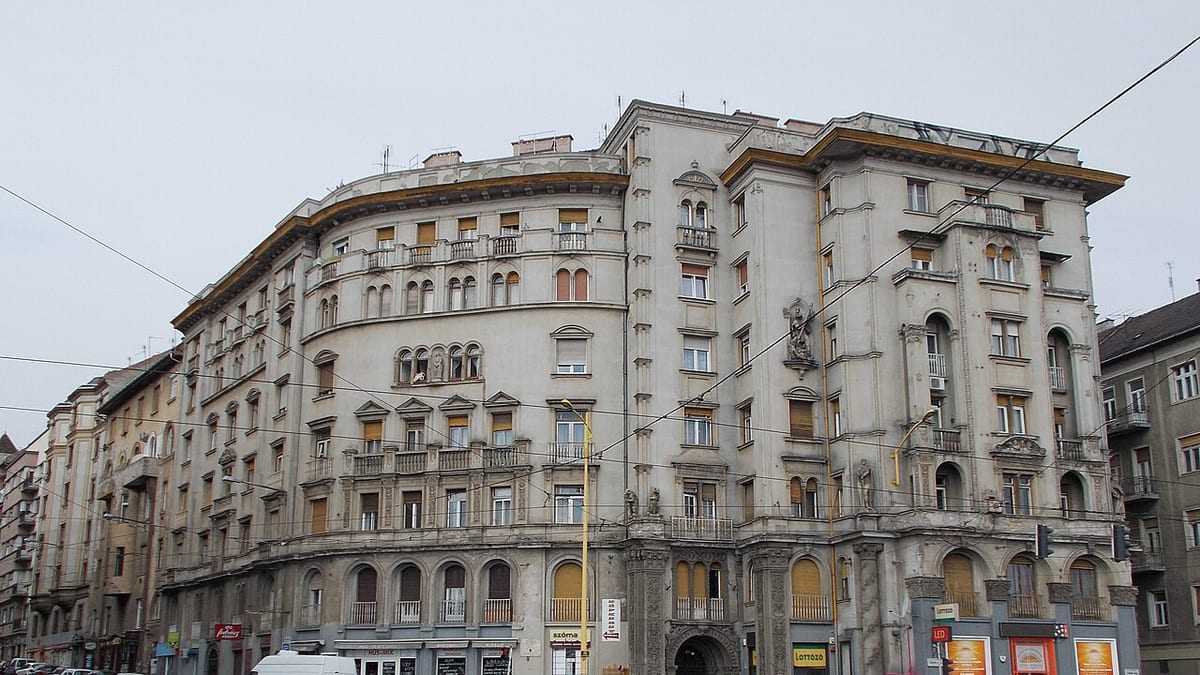
Budapest's public tap-water supply is generally suitable for drinking, and buying bottled water throughout a visit is not ordinarily necessary. Use cold water from a potable supply and pay attention to any building-specific warning. The important qualification is that good water in the distribution network does not prove that every old property's internal plumbing is in equally good condition. [1] [2]
The public supply and the building are two separate questions
Fővárosi Vízművek, Budapest's water utility, reports that its supplied drinking water meets applicable Hungarian and European Union standards. It publishes quality information and describes monitoring through accredited laboratories and the public-health system. That is a more useful starting point than judging the water from the appearance of the Danube beside your hotel. [1]
Budapest's supply relies substantially on riverbank-filtered water sources, supported by treatment and testing. This does not mean that a visitor should collect river water, drink from an ornamental fountain or assume all natural springs around the city are potable. The regulated drinking-water system is the relevant distinction. [3]
The last part of the journey takes place inside a property. The utility notes that older internal pipework can change water quality and offers laboratory tests for concerns such as lead. A renovated bathroom or attractive apartment photograph is not a water-test result. [2]
For an ordinary hotel stay without a warning or known problem, the municipal quality information supports using the drinking-water supply. For an apartment whose owner mentions old pipes or a recent plumbing issue, ask a specific question: is the kitchen's cold-water supply suitable for drinking, and has the identified concern been resolved?
Avoid turning that sensible question into a claim that Budapest's older buildings are universally unsafe. The condition of one property's network is not the same as the quality of the whole city's supply. Equally, a citywide reassurance should not be used to dismiss a particular property's documented problem.
Use cold water and distinguish taste from a known fault
The utility recommends cold water for drinking and cooking, because water quality after a building's hot-water equipment is not controlled in the same way. It also advises flushing stagnant water after a supply has gone unused for several days. These are practical building-use measures, not a reason to treat every hotel tap as suspicious. [4]
Use cold water to fill a kettle rather than trying to save a moment with the hot tap. At a holiday apartment that has stood empty, ask the host about any restart instructions. Do not invent a special flushing duration for a building whose plumbing conditions you do not know.
Budapest Waterworks describes the city's water as moderately hard. Mineral content can affect taste and leave scale, but visible scale is not in itself proof of contamination. A preference for a different flavour is a personal choice, distinct from an official warning that water should not be consumed. [5]
A new, persistent change deserves attention. Report unusual water after building works or a local interruption to the accommodation, rather than trying to diagnose it from a photograph. Use an alternative drinking source until the responsible party has clarified a genuine concern. A travel article cannot certify an individual tap from a distance.
Lead concerns need evidence, not a boiling trick
The utility identifies older internal lead pipes and some fittings as possible sources of lead. Its guidance also explains that lead cannot be reliably identified by taste or smell and that boiling does not remove it. A risk map based on building age is not equivalent to a measurement from the property. [6]
This matters when someone offers "just boil it" as a universal answer to questionable water. Boiling addresses some microbiological situations, but it is not a general solution to chemical contamination. Follow the relevant utility or public-health instruction for the actual problem rather than applying one household remedy to everything. [4]
For a short visit, you do not need to arrange your own technical investigation of a hotel. Ask the manager for clarification when there is a specific warning, use an appropriate alternative while it is unresolved and choose different accommodation when the explanation is unsatisfactory. Travelers with medical or infant-feeding requirements should obtain advice suited to those needs rather than rely solely on general city guidance.
Refill from a drinking-water point, not any attractive fountain
Bring a reusable bottle and fill it from a known potable source before a long day. A hotel kitchen tap, a designated drinking fountain and an ornamental pool are not interchangeable. Look for the drinking-water designation and any local warning; when the purpose of a water feature is unclear, choose another source.
At Budapest Airport, the operator identifies thirteen drinking fountains and explicitly encourages passengers to refill bottles. This is a useful alternative to automatically buying bottled water after security, provided you can reach the fountain in the area where you are permitted to be. [7]
Do not assume an outdoor refill point will be operating merely because it appears on an old map. Seasonal operation, maintenance and local work can affect availability. Start a substantial walk with water already available instead of making the plan depend on one unverified fountain halfway through.
Keep the bottle's mouth away from a shared outlet and clean the container regularly. A refill routine should not introduce avoidable contact with a public spout. These are ordinary hygiene precautions, not a claim that Budapest's designated fountains require special treatment.
Ordering water and budgeting for it
At a restaurant, ask specifically for tap water and establish whether there is a charge. Do not assume that "water" means a complimentary jug rather than a bottled product, and do not treat a personal preference for tap water as proof of a universal entitlement to free table service.
When buying bottled water, check whether it is still or sparkling before opening it. Compare the volume as well as the price: a small bottle at a visitor venue and a larger supermarket bottle are different purchases. No fixed citywide price is useful enough to justify quoting one without a dated shop reference.
For budgeting, use your own actual spending. If a traveler replaces several paid bottles with refills, the saving is the number of bottles avoided multiplied by the price they would otherwise have paid. That is a simple personal calculation, not evidence that every visitor saves the same amount each day.
The sensible default is to use Budapest's drinking-water supply with normal care, while taking a specific property warning seriously. You do not need to carry a suitcase of bottled water or buy a filter merely because you are visiting another country. You do need to distinguish public-system quality, internal plumbing and the particular outlet in front of you.
Sources
- Budapest Waterworks: drinking-water quality and monitoring
- Budapest Waterworks: internal networks and water testing
- Hungarian Water Utility Association: Budapest supply explanation
- Budapest Waterworks: preserving water quality at home
- Budapest Waterworks: water hardness
- Budapest Waterworks: lead and building plumbing
- Budapest Airport: designated drinking fountains