Driving in Budapest works best when the car is part of a wider journey and you have a definite place to leave it. Do not plan ordinary private-car travel across Chain Bridge, and do not rely on old parking-meter advice: street parking moved to cashless payment from July 2026. Central parking, protected access and motorway tolls are separate rules to organize before arrival. [1][2]
Plan the final parking location, not just the hotel address
For an overnight stay, establish whether the hotel has its own garage, a partner facility or only nearby public parking. Ask for the vehicle entrance, height restrictions and any access instructions. A booking confirmation that says "parking available" does not necessarily reserve a space or include its price.
For a day visit, compare a long-stay garage with a park-and-ride facility that fits your direction of arrival. The car's usefulness for reaching Budapest does not mean it needs to accompany every journey within the city.
This distinction becomes particularly useful when luggage or a late departure is involved. You may prefer a more convenient garage over the cheapest nominal tariff, but make that choice using the expected full stay. A first-hour price is not enough to budget an afternoon and evening.
Avoid an itinerary that depends on moving the car repeatedly between central attractions. Each move introduces another search for a permitted space, another payment and another opportunity to misread a local condition. One well-chosen parking location usually gives you more freedom afterward.
Chain Bridge is not an ordinary private-car shortcut
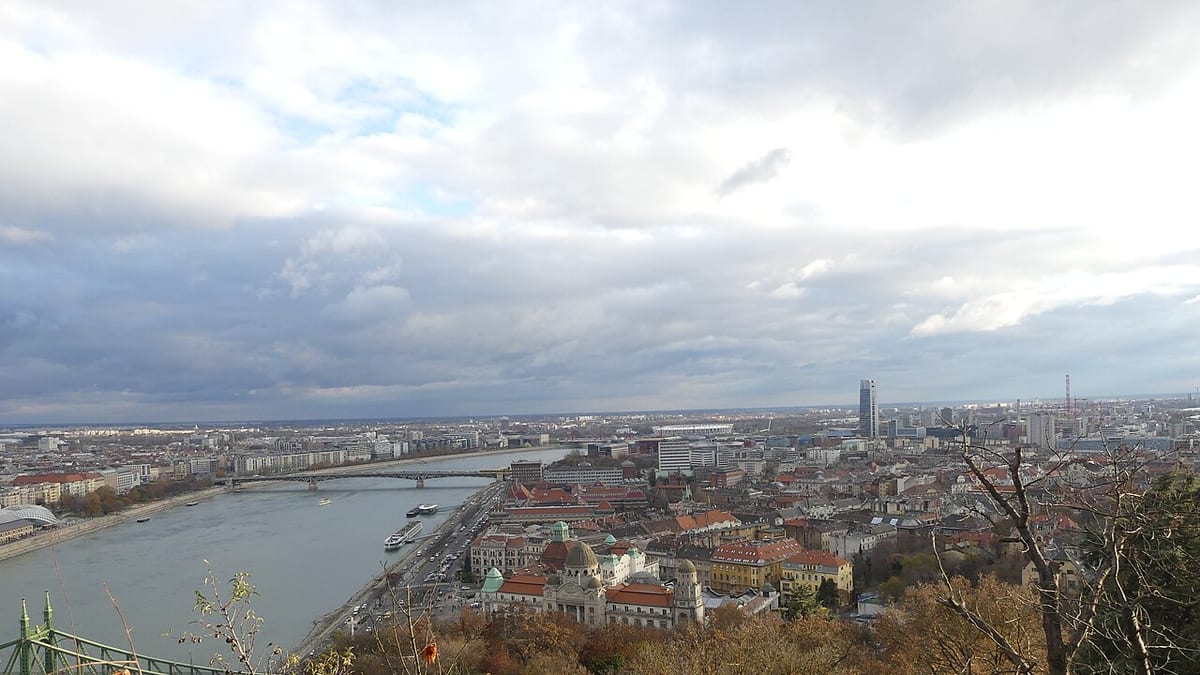
Chain Bridge's permanent traffic arrangement excludes ordinary private cars while allowing specified categories such as public transport, taxis, bicycles and motorcycles. A driver following a taxi should not assume that the taxi's route is available to a private vehicle. [2]
Set your navigation accordingly and follow the signed route rather than trying to preserve an app's shortest line across the river. A bridge visible on a road map is not evidence of unrestricted access for every vehicle category.
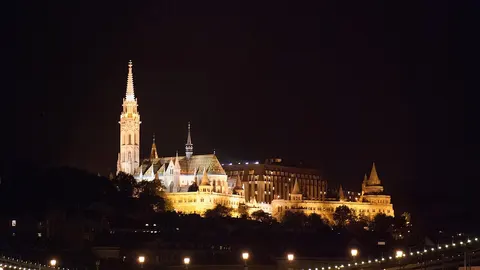
The Castle District introduces a different access issue. Protected zones have their own entry and charging arrangements, administered through the responsible local operator. Paying ordinary street-parking fees elsewhere in Budapest does not confer access to these zones. [3]
If your accommodation is inside a controlled area, obtain its exact arrival procedure before driving there. A hotel reservation may allow the hotel to arrange something specific, but it should not be interpreted as unlimited access without following that process. Ask about arrival, unloading and where the car must remain afterward.
Street parking changed to cashless payment
From 1 July 2026, Budapest's street-parking system moved away from cash payment at parking machines, using supported digital and mobile payment methods. This concerns the municipal street system; it should not be generalized to every privately operated garage or car park. [1][4]
Prepare the payment method before leaving the car. Confirm that it accepts your account or phone arrangement, that the correct registration is entered and that the parking session has actually started. Sending a message or opening an app is not enough if the required confirmation fails.
The zone code is as important as the plate. A payment started for a neighboring zone does not automatically cover the space where the car stands. Read the sign at the actual location, especially near boundaries between areas with different charges or hours.
For a rental vehicle, remove any previous plate saved in the app before activating the session. Keep the confirmation available and stop the session correctly when leaving if the payment method requires it. Those simple steps are more useful than trying to resolve an incorrect registration after the visit.
Use the current zone tariff, then read the local conditions
The published 2026 street-parking structure lists hourly rates of HUF 800 in Zone A, HUF 600 in Zone B, HUF 400 in Zone C and HUF 300 in Zone D. The standard charging windows extend to 22:00 in A, 20:00 in B and 18:00 in C and D, with the applicable working-day and local arrangements set out in the official guidance. [1]
Do not reuse an older article's HUF 600 Zone A figure as the current rate. Equally, do not assume the headline zone table overrides a local restriction, maximum stay or specially regulated location. The sign and the active payment system need to agree with your intended parking session.
An hourly charge is not a license for unlimited storage. If the location imposes a maximum stay shorter than your visit, choose a garage or appropriate long-stay facility instead of assuming that repeated payments remove the limit.
For planning, price the entire period when the car needs to remain, not only the first hour. Then compare that with a facility whose conditions match a longer stay. A cheaper hourly figure in a less convenient location may still be a poor choice if it forces an early return.
Park-and-ride has day and night conditions
Etele P1 provides a useful example of why a park-and-ride price needs its time conditions attached. Its listed daytime arrangement from 06:00 to 22:00 is HUF 500 per parking occasion, while the night period from 22:00 to 06:00 is charged at HUF 300 per hour. [5]
Eight chargeable night hours at that hourly rate would total HUF 2,400, before any other applicable part of the stay. That calculation shows why the HUF 500 daytime figure should not be advertised as an unrestricted overnight price. [5]
Onward public transport is another separate cost unless you already hold the required ticket or pass. Compare the total for your group, not just the driver's parking payment. For an all-day sightseeing visit, the ability to leave the car without a short street deadline can still make park-and-ride attractive.
A hotel garage may be simpler for a multi-night stay, particularly if you need luggage access. The correct comparison is the full duration and the practical transfer, not a daytime promotional figure against an overnight garage rate.
Buy the right motorway vignette for the car
Hungary's electronic motorway vignette is independent of Budapest parking. For a standard D1 passenger-car category in 2026, the official tariff is HUF 5,550 for one day, HUF 6,900 for ten days and HUF 11,170 for one month. Vehicle category and route still need to be checked before purchase. [6]
Two separate one-day products would total HUF 11,100. Where the two motorway journeys fall within one ten-day validity period, the ten-day product is therefore HUF 4,200 less under those assumptions. That is a useful return-trip calculation, not a rule that the same product suits vans, larger vehicles or every itinerary. [6]
A one-day vignette covers the applicable calendar day, not a rolling twenty-four hours. For same-day purchase, validity begins according to the purchase conditions rather than automatically covering earlier travel. Arrange the entitlement before entering a tolled section instead of treating the purchase as something to complete later. [6]
For a rental car, confirm the registration country, plate, vehicle category and any entitlement already supplied by the hire company. A city parking payment, a garage receipt and a motorway vignette are three different things; none substitutes for the others.
Make arrival the only complicated car journey
A straightforward Budapest driving plan has a legal approach route, a confirmed parking destination and the correct payment or toll arrangements prepared in advance. Chain Bridge restrictions and Castle District access should be settled before arrival, not discovered while following another vehicle.
Once parked, let the sightseeing itinerary operate independently of the car. That preserves the benefit of having driven to Budapest without allowing parking limits, zone changes and payment sessions to determine every part of the visit.
Sources
- BKK: Budapest parking zones and payment information
- BKK: why Chain Bridge is free of ordinary private cars
- Budavári Kapu: protected zones and tariffs
- Budapest municipality: cashless parking from July 2026
- Budapest Közút: Etele P1 parking conditions
- Hungarian national toll operator: 2026 e-vignette rates