Eger Castle is worth visiting when the history of the fortress and the town around it both interest you. It is a less convincing journey from Budapest for a quick photograph alone. Choose the museum or guided elements you actually want, then plan the outward and return travel around their availability rather than assuming that access to the grounds includes every interior. [1][2][3]
The siege story gives the site its meaning
The castle's best-known historical association is the defense of Eger against an Ottoman siege in 1552, connected with István Dobó and the defenders whose story the museum interprets. That context makes the walls and defensive spaces more meaningful than they would be as an unexplained ruin. [1]
Begin with the historical introduction rather than heading immediately for a viewpoint. Try to understand what the defenders were protecting, how the position worked and why the event became important in Hungarian memory. A view from a wall becomes more interesting when you can relate the surrounding terrain to the story being told.
At the same time, distinguish the historical event from later patriotic interpretation. A museum can explain both what happened and how a story was remembered. Looking for that distinction does not diminish the achievement; it makes the visit more intellectually rewarding than treating every dramatic retelling as a contemporary eyewitness account.
For a visitor unfamiliar with Hungarian history, a small amount of preparation is enough. Read the museum's introduction and identify a few questions to follow through the displays. You do not need to memorize a chronology before arriving.
Grounds, exhibitions and guided areas solve different needs
The operator publishes separate ticket categories and visitor information for the castle's experiences. Read the actual product rather than assuming that a ticket bearing the castle's name automatically includes every exhibition or guided area. [3]
A visitor interested mainly in the setting may want a different product from someone seeking detailed museum interpretation. Another traveler may be particularly interested in the defensive passages or a guided explanation. The best purchase is the one covering the reason you came, not necessarily the broadest bundle.
Before paying, identify which parts require a timed departure, a guide or a separate supplement. Also confirm the language of any guided visit. An English-language website does not establish that every tour on the day is conducted in English.
For a family, decide whether the children will respond better to a historical exhibition, an outdoor exploration or a shorter guided experience. More inclusions can become less useful if they create an itinerary too long for the group's attention and energy.
The view is a complement, not the whole justification
The elevated castle setting offers a way to understand Eger's relationship with its surrounding landscape and town. Use the outdoor part to connect the museum story with the place rather than treating it only as a backdrop for photographs. The tourism authority presents the castle within a wider destination, not as an isolated stop. [4]
Choose a clear period for the outdoor section when possible, but do not make the visit depend on perfect photographic conditions. A substantial indoor component can still give the outing value when weather limits the time on exposed paths.
Look in both directions as you move through the site. The relationship between buildings, walls and approaches can be more revealing than a single broad panorama. Taking fewer photographs and spending longer orienting yourself often produces a clearer memory of the place.
For travelers whose only interest is a skyline image, the journey from Budapest may feel disproportionate. That is not a criticism of the castle; it is a reason to match the excursion to your actual interests.
Seasonal access needs to shape the day
Eger Castle publishes an operating calendar, and its grounds, exhibitions and individual activities should not be assumed to share one identical timetable. Use the current dated information for the part you want to visit, especially outside the main season. [2]
A late arrival can leave enough time to enter the grounds but too little time for a meaningful museum visit. Work backward from the final available tour or exhibition admission, not merely from the outer closing time.
Do not build a winter itinerary from a summer review. Shorter daylight changes the outdoor experience, and a seasonal or specially scheduled activity may not operate on an ordinary weekday. No unconfirmed November departure or exact current admission total is promised here.
Once the essential visit is confirmed, leave flexibility around the optional parts. A booked interior experience can be the anchor, with the outdoor route shortened or extended according to weather and energy.
The approach and surfaces matter
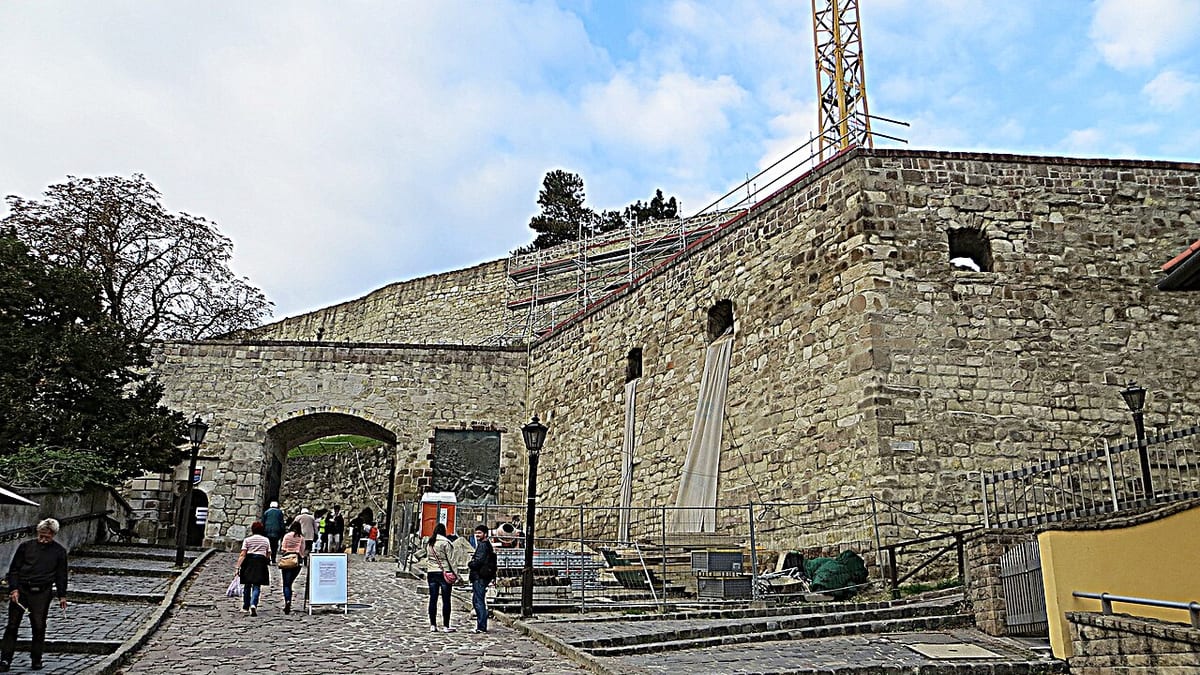
A fortress visit involves a different physical environment from a modern museum on a flat street. Ask about the exact entrance, gradients, stairs and surfaces when those details affect your ability to enjoy the site. Do not assume that a vehicle reaching the town center removes the effort required inside the castle.
Wear footwear suitable for outdoor walking and leave time for the approach. A guided start time should not turn the final climb into a hurried test of stamina. In wet conditions, slow down rather than treating the advertised walking distance as a fixed completion time.
For wheelchair users or visitors who need a step-free route, contact the operator about the particular exhibitions and viewpoints you want. Access to one courtyard does not establish access to every defensive passage or historic room.
With children, include a rest and food plan before fatigue takes over. A castle can be exciting without every exposed path needing to be completed. Choose a manageable route that preserves curiosity rather than turning the last part into an endurance exercise.
Combine the castle with Eger, not with another distant checklist
The strongest case for the trip from Budapest is a broader Eger outing. Give the castle a substantial block of time, then allow room for the town's historic center, a meal or another attraction selected through the official destination information. [4]
Avoid adding a second distant excursion simply because it appears geographically possible. Travel time, opening conditions and the need to return to Budapest can turn an appealing map into a rushed day.
Compare the actual outward and return connections for your travel date, including the walk or local transfer between the arrival point and the castle. A railway or bus arrival in Eger is not the same as reaching the museum entrance.
An overnight stay can be worth considering when you want a more leisurely exploration, but it is not necessary for every visitor. The choice depends on how much of Eger interests you beyond the fortress and how comfortable the available day-trip connections are.
Who should go, and who should choose another outing?
Choose Eger Castle when military history, Hungarian cultural memory and a historic town all appeal. It can offer a richer day than an attraction selected solely for its appearance, because the museum and landscape reinforce each other.
Choose a closer excursion when your available time is short, when you dislike extended travel or when only a brief exterior stop interests you. A famous fortress is not automatically the best use of every Budapest holiday.
The successful visit begins with a clear purpose, the correct ticket and a workable return plan. Give the siege story context, select the interiors that matter and leave time for the town. That combination is what makes Eger Castle more than a distant photograph.