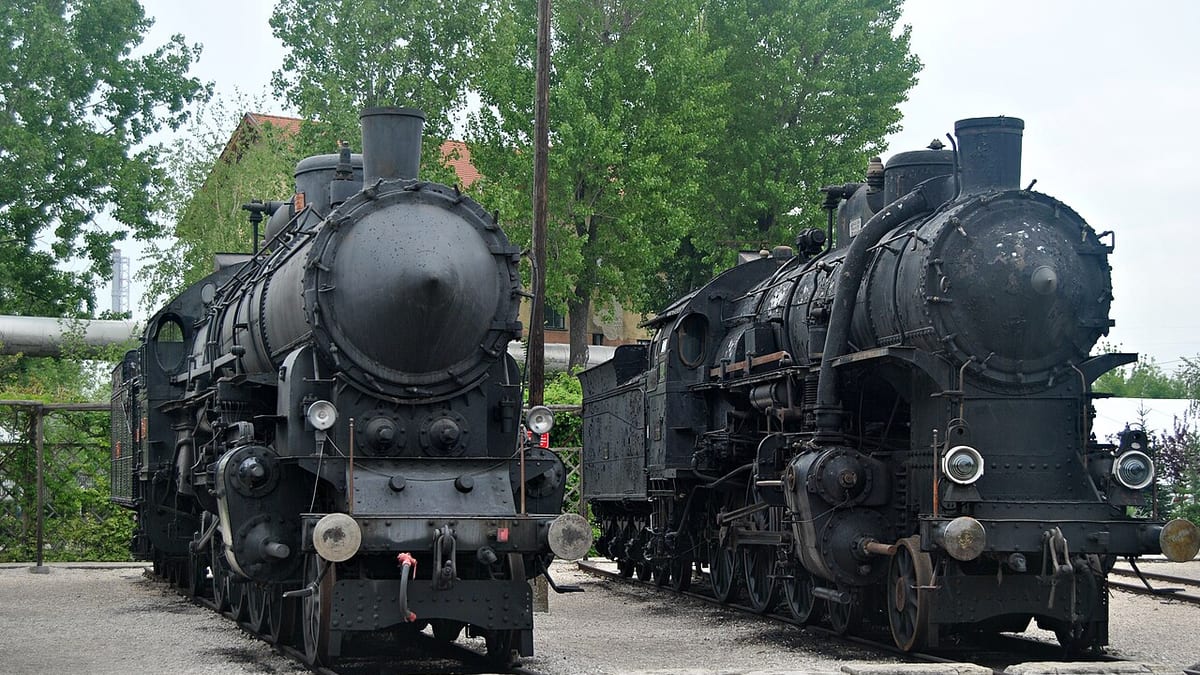
The Hungarian Railway Museum is worth visiting for railway enthusiasts and families who enjoy large vehicles and outdoor exploration. It is less suitable as an assumed all-weather indoor museum or an unplanned winter stop. Check the dated operating calendar and the availability of interactive activities separately: admission to the collection does not automatically include every ride or demonstration. [1][2][3]
Choose it for the machines and the railway setting
The museum's appeal lies in historic railway vehicles and the setting in which they are displayed. This is a different experience from a conventional gallery where most objects fit inside glass cases. The scale of locomotives, carriages and railway equipment is part of what makes the visit engaging. [3]
For an enthusiast, choose a few vehicles or technical subjects to examine closely. Look at how a locomotive's layout reflects the work required to operate it, or how a carriage's interior reveals the intended passengers and service. Reading a label becomes more useful when it answers a question prompted by the object.
For a general visitor, compare different eras rather than trying to memorize model numbers. How did the driver's work change? What space was provided for passengers? What parts of the railway system are visible beyond the vehicle itself?
Children often respond to the size and physical presence of the machines. Give them a few concrete things to notice, such as wheels, couplings or the difference between passenger and working spaces, without turning the outing into a technical lesson at every stop.
Outdoor space is central to the experience
Much of the railway-park experience involves moving among large outdoor exhibits. That makes weather and daylight important in a way they may not be at a fully indoor museum. Dress for time spent standing still as well as walking. [2][3]
A cool dry day can work well, but persistent rain can change how long the group wants to remain outside. Do not assume that every vehicle can be entered or that indoor areas can absorb the entire visit when the weather turns.
Choose a route with breaks and a clear return to the exit. A large collection can encourage visitors to keep moving toward the next object long after the least enthusiastic companion has had enough.
For photographers, allow time to look at details without stepping into restricted areas or climbing equipment not open to visitors. A vehicle being displayed outdoors does not make every ladder or footplate available for public use.
Choose the activity, not an assumed all-inclusive ticket
The published 2026 activity list prices the garden railway at HUF850 per person and a small diesel-locomotive ride at HUF1,600 for up to four people. The latter is a weekend activity. Larger diesel and steam experiences are occasional event offerings, not everyday guarantees, and interactive programs stop in rain for safety. [1]
For a family, those different charging units matter. Four garden-railway admissions would total HUF3,400; a listed small-diesel ride for the same party would be HUF1,600. That does not make one inherently better: riding a miniature train and sharing a locomotive experience are different reasons to spend the money.
Decide which experience matters before promising it to a child. A railway ride shown in promotional material is not necessarily operating continuously throughout every open day. Ask about the actual departure arrangement and what happens if the activity is suspended.
Keep the static collection as a worthwhile part of the plan in its own right. An outing that remains enjoyable without one particular ride is more resilient to weather and operational changes than a visit built entirely around an unconfirmed photograph.
Seasonal operation comes before transport planning
The railway park publishes a seasonal programme and dated notices. A general listing that describes the museum as a Budapest attraction should not be treated as proof of daily winter opening. Use the operator's current calendar before making the journey. [2]
This is especially important for a November visit. No unconfirmed ordinary November opening day or live interactive-ride schedule is promised here. A special event, an exceptional opening and the regular season are different arrangements.
Once the date is confirmed, check the opening period for the whole site and any earlier finish for activities. Arriving close to the final admission time may leave little opportunity to use the optional experiences even if the grounds remain open.
A seasonal closure is not a reason to improvise access or rely on an old review. Choose another museum for that day or plan a later visit when the published programme supports the experience you want.
Compare the real family total
Standard 2026 admission is listed at HUF3,200 for an adult and HUF1,500 for a child in the published 3–18 category, with a two-adult, two-child family ticket at HUF8,700. Ordinary admission and annual passes do not cover externally organized events. The calendar lists a separate event on November 7, 2026, so an ordinary-ticket assumption is particularly unwise for that date. [1]
For two adults and two eligible children, separate standard admissions total HUF9,400. The family product therefore saves HUF700 before optional activities. Add the rides you actually intend to use rather than interpreting the entrance ticket as a complete activity package.
An adult traveling with one child has a different calculation, and a group with very young children needs to apply the operator's age rules correctly. Ask about a boundary birthday rather than reading overlapping age wording as permission to choose whichever category costs least.
Keep food, transport and optional shop purchases outside the admission comparison. That makes it easier to set a sensible total without treating each small extra as a surprise. A larger package only helps when its included experiences are operating, suitable and genuinely wanted.
The final approach and surfaces deserve attention
Search BudapestGO for the museum's actual entrance and the date of travel. A route ending near a railway facility or a similarly named stop is not necessarily the visitor entrance. Use the operator's arrival information alongside the planner. [3][4]
Allow time for the last walk rather than calculating the journey only to the nearest bus stop. With young children, that final section can matter as much as the ride itself.
For mobility needs, ask about the surfaces between exhibits, toilets and access to any vehicle or activity you consider essential. A route through the grounds may be manageable while entering a historic carriage involves steps that cannot be removed.
The distinction should inform the decision, not automatically rule the museum out. A visitor can enjoy a substantial outdoor collection without boarding every vehicle, provided the accessible part matches the reason for coming.
Who will get the most from the visit?
Choose the museum when railway history, engineering or large vehicles are genuine interests. It can be particularly rewarding for a group willing to slow down and compare how machines were used, rather than treating the site as a sequence of ride queues.
Choose a more central indoor attraction when the weather is poor, the operating date is uncertain or the group has little interest in the collection itself. The journey is easier to justify when the static exhibits remain worthwhile even if one optional activity is unavailable.
The best railway-museum day begins with a confirmed seasonal date, a realistic list of desired activities and enough time outdoors. Keep admission and extras separate, respect the limits of historic vehicles and let curiosity determine the route. That creates a richer visit than expecting every machine in sight to be something you can ride.