Füvészkert is worth visiting when you enjoy plants, glasshouses and a compact garden that rewards close attention. It is less suitable when you want a large free park or an uninterrupted afternoon of running around with children. Choose between the ordinary daytime botanical visit and the separately organised evening light exhibition; they are not interchangeable tickets or experiences. [1] [2] [3]
A botanical collection, not another version of City Park
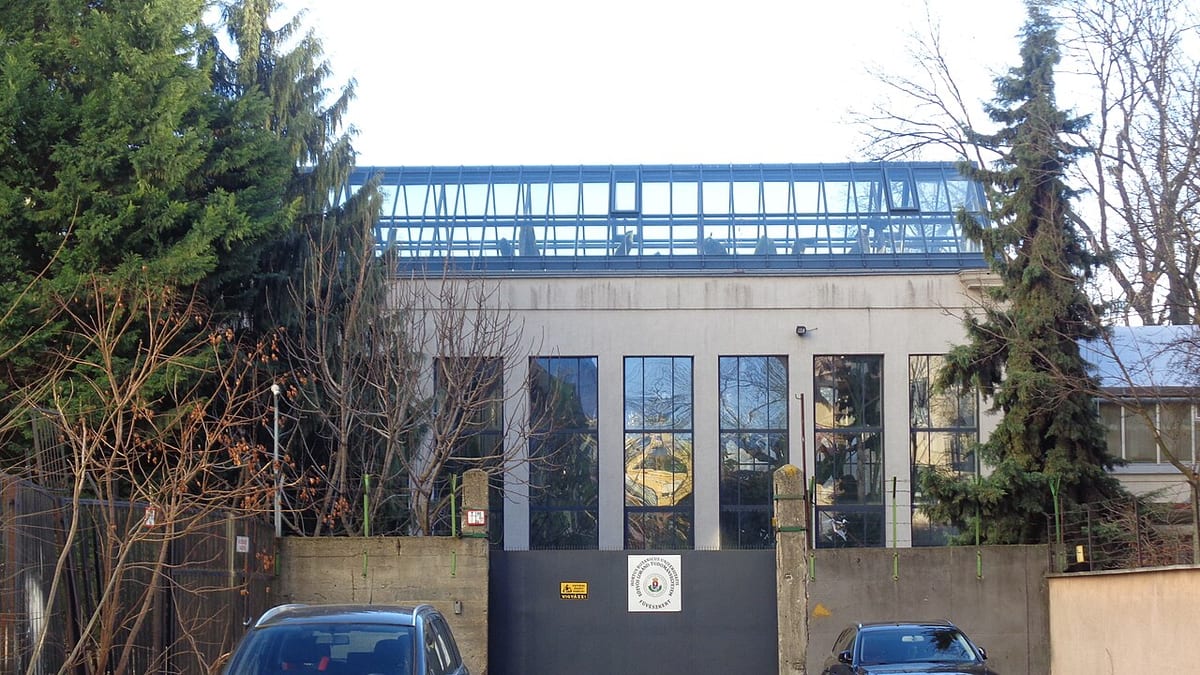
The ELTE botanical garden stands at Illés utca 25 in Józsefváros. It is separate from Budapest Zoo and Botanical Garden in City Park, and from similarly named gardens elsewhere in Hungary. Enter the full address when planning the journey: searching simply for "Füvészkert" can produce an entirely different destination. The university describes a garden of approximately 3.1 hectares, so think of a concentrated collection rather than a sprawling landscape. [1] [4]
That scale can be an advantage. You do not need to dedicate a whole day to reaching distant viewpoints, and a visitor interested in leaves, bark, growth patterns and glasshouse plants can find plenty to examine without covering a huge distance. My planning recommendation is to leave roughly ninety minutes to two hours, extending that when a particular collection or organised activity interests you.
The garden's history includes university teaching, changing scientific approaches and the gradual pressure of surrounding development. Its surviving glasshouses and planted spaces make more sense as parts of a working botanical institution than as a uniformly decorative municipal park. The operator's history and collection pages provide useful context before a visit. [5]
Choose it over another major monument when you need a change of pace. Someone visiting Budapest for the first time with only one full day may reasonably prioritise the river and Castle District instead. A returning visitor, an enthusiastic gardener or a traveler staying nearby has a stronger reason to make the detour.
Daylight and greenhouse time matter more than the last admission
The published ordinary schedule is daily, including public holidays: 09:00–17:00 from April through October and 09:00–16:00 from November through March. Last admission is thirty minutes before closing, while the glasshouses close fifteen minutes before the garden itself. Private events or filming can create additional closures. [2]
The practical implication is straightforward: arriving just before the ticket office closes leaves very little time for the glasshouses. During the winter timetable, a 15:25 arrival is technically earlier than the stated last admission, but it does not support a relaxed botanical visit. Book the garden into the middle of the day rather than using it as an uncertain final stop.
Choose the order according to conditions. In mild weather, begin outdoors and use the glasshouses for the part of the visit when you want a different environment. In poor weather, ask which indoor collections are accessible before assuming the admission buys a complete rainy-day substitute for a museum. Outdoor paths remain part of moving between buildings.
Seasonal interest should also guide expectations. A photograph of a flowering plant or a special water-lily event is not a year-round promise. The garden publishes dated activities, including thematic walks and plant-focused events. Use those listings to identify a specific occasion, rather than booking around a photograph with no month attached. [6]
What the ordinary ticket costs - and what it does not settle
The 2026 tariff lists adult admission at 2,200 HUF, student admission at 1,100 HUF and a family ticket at 5,500 HUF for two adults and two children within the stated age condition. Event prices can differ. The same tariff includes a 600 HUF plant-photography ticket and separate arrangements for organised photographic sessions, so ask about the applicable permission before treating admission as unrestricted photography access. [7]
For an eligible family comparing ordinary tickets, the family option deserves attention. For two adults traveling alone, the standard admission total is 4,400 HUF. Those are calculations from the published tariff, not estimates of what visitors typically spend. Transport, any applicable photography permission and a meal elsewhere remain separate choices.
A guided visit is another product. An English-language group tour is listed separately rather than being automatically included in each ordinary admission. For a casual visitor, an independent wander may be sufficient; a group with a serious botanical interest should establish the guide's language, availability and total charge before confirming. [7]
Do not assume a discounted or complimentary entry category applies simply because you are a student somewhere. Bring the relevant documentation and read the exact category. It is easier to resolve eligibility at purchase than to plan the entire outing around a concession that was intended for a particular institution or group.
The evening light exhibition is a different outing
The Garden of Lights operator lists its current exhibition season from 23 October 2026 to 3 January 2027, excluding 23 and 24 December. Its admission permits access during the exhibition's own hours, not an unrestricted daytime botanical visit. The garden itself directs light-exhibition enquiries to the separate organiser. [3] [1]
Choose daytime for plant labels, foliage details and the botanical collection. Choose the evening event for a designed light experience. Combining both may appeal to a particularly interested visitor, but it should be planned as two arrangements rather than an assumption that one ticket covers everything.
The distinction is especially important in winter. A late-afternoon arrival can fall between the ordinary garden's closing routine and an evening event's separate admission process. Establish which entrance procedure, ticket and session you need before heading over. Do not rely on the garden's general daytime hours to interpret an evening booking.
Getting there and deciding whether it suits your group
The garden identifies M3 stations Semmelweis Klinikák and Nagyvárad tér as public-transport approaches, with other connections around Kálvária tér. Use the journey planner for the final walk to Illés utca rather than assuming the garden gate stands immediately outside a station. The operator also identifies the Hungarian Natural History Museum and Orczy Garden as nearby places, useful for building a geographically coherent half-day. [1]
The visitor rules matter for families: children under fourteen must be accompanied, and the garden is not designated as a playground. Visitors must stay out of restricted areas and avoid damaging plants; ordinary pets, cycling and ball games are prohibited. A group needing active play should choose a suitable park instead of trying to make a protected collection serve that purpose. [8]
For wheelchair users or anyone unable to manage uneven surfaces, ask about the particular glasshouses and paths you intend to visit. A small site does not by itself establish a step-free route through every building. Specific access information is more useful than a general assurance that the garden is easy to see.
Füvészkert earns its place through attention rather than spectacle. Arrive with enough daylight, choose the right ticketed experience and allow yourself to stop over individual plants. That approach makes a compact garden feel worthwhile without pretending it should replace every other green space in Budapest.