
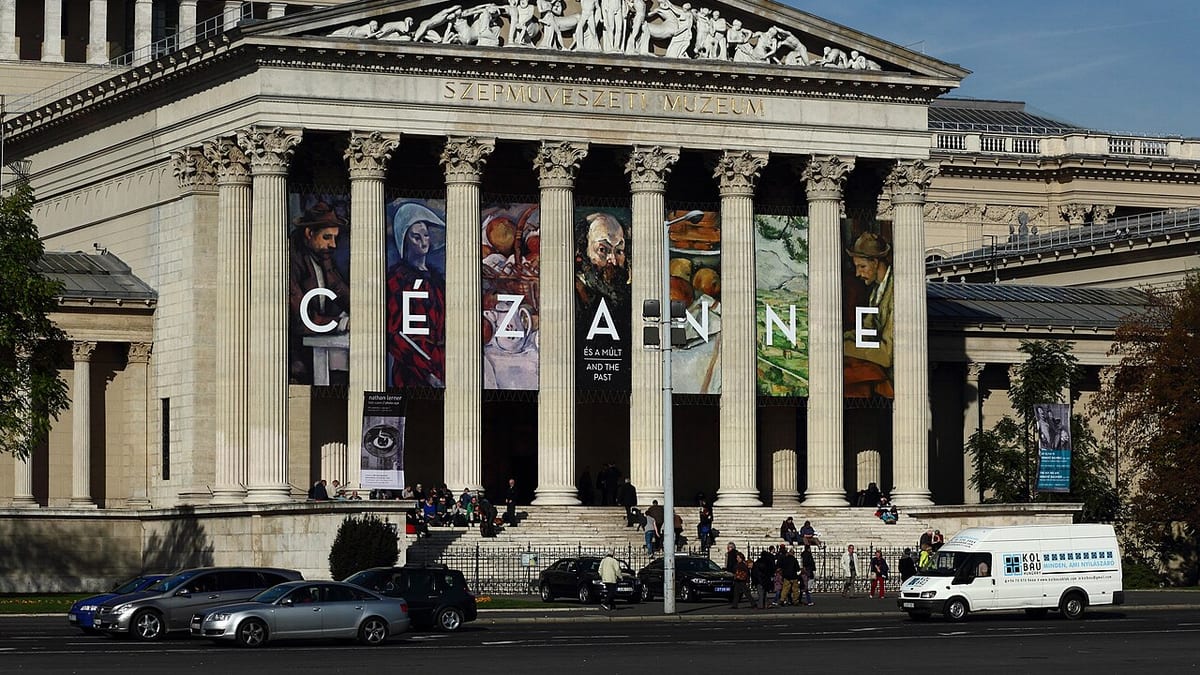
Budapest's Museum of Fine Arts is worth visiting when European Old Masters, ancient art or the building's monumental interiors interest you. Choose two or three collection areas rather than attempting everything. The permanent collection is a substantial attraction in its own right; a temporary exhibition can strengthen the visit, but its ticket and timing should be assessed separately. [1][5]
Choose this museum for its actual collection
The Museum of Fine Arts brings together Egyptian and Classical antiquities, European painting and sculpture, prints and drawings, and older Hungarian material. It is not simply a national painting gallery, nor a comprehensive museum of contemporary Budapest. Understanding that scope helps you choose it for the right reason. [1]
For a first visit, pick one broad interest and one contrasting area. Old Master painting plus Egyptian material offers a very different rhythm from painting plus sculpture. A visitor fascinated by ancient civilizations might spend most of the time in antiquities and give the grand interiors only a short architectural pause.
Do not turn the variety into a challenge to finish every room. A large collection can reward repeated visits precisely because it exceeds the attention available in a single afternoon. Two hours spent looking closely at a selected route can be more meaningful than four hours of rapidly diminishing concentration.
The institution's name is also easy to confuse with the Hungarian National Gallery in the Castle District. Confirm the address and exhibition location on the booking before arranging transport. Shared museum administration or a familiar artist's name does not make tickets to separate buildings interchangeable.
Old Masters: look beyond a list of famous names
The painting collection is particularly strong in Italian and Spanish art, with the museum identifying artists including Raphael, Titian, El Greco, Velázquez and Goya in its description. Netherlandish, German and other European schools provide further comparisons across several centuries. [2]
Those names are a useful starting point, not a promise that every well-known work is hanging in its usual place on the day you arrive. Individual loans, conservation and display changes can affect the visit. Confirm a specific work's current status when it is the sole reason for buying admission.
A more resilient approach is to choose a subject and follow it across several paintings. Compare how a portrait constructs status, how a religious scene directs the viewer's attention, or how a landscape makes space feel convincing. The differences can be visible without memorizing dates and movements beforehand.
Look before reading the label, then use the information to test your first impression. A painting that seemed quiet may be carefully theatrical; a seemingly natural pose may depend on an elaborate arrangement. Giving a few objects that attention makes the museum more useful than simply photographing each famous attribution.
Antiquities offer another way into the visit
The Egyptian collection has its own collecting history, brought together as a dedicated museum collection in the twentieth century. Its objects are more informative when considered in relation to their original use and the later process by which they entered a European museum. [3]
For families, this can be an accessible route into close observation. Ask what an object was made from, how it might have been used and which details help identify its purpose. Avoid reducing the entire collection to mummies or treating funerary objects as props for a frightening story.
Classical antiquities provide a different comparison with the European paintings upstairs: bodies, gestures and inherited visual ideas can reappear in later works. You do not need to see every ancient object to notice that connection. The museum's collection overview can help identify the areas most relevant to your interests. [1]
For a short visit, choose either Egyptian or Classical material as a principal section rather than rushing through both. Their value lies in the particular objects and explanations, not in completing two historical civilizations before lunch.
The Romanesque Hall is a museum interior, not a medieval church
The Romanesque Hall is one of the building's most distinctive spaces. Its restoration brought an elaborate historicizing interior back into public use after decades of restricted access. The Liget Budapest project describes the extensive conservation work that made that possible. [4]
The important interpretive distinction is that you are inside a museum hall designed to evoke an architectural tradition, not standing in a surviving medieval church transported intact into Budapest. Appreciate the painted surfaces, columns and overall effect while keeping that history clear.
It is worth pausing here even during a collection-focused visit. The room changes the scale of attention: instead of concentrating on a framed object, you can look at how an entire interior organizes movement and sightlines. Allow the building to be part of the experience without making it the only reason to enter.
A specific hall can be affected by an event or operational restriction. When seeing it is essential, use the museum's current notice rather than assuming a restoration announcement guarantees unrestricted access at every hour forever. The general museum ticket and the day's usable route are related but different questions.
Permanent admission and the current exhibition are separate decisions
Start with the museum's ticket information and the exhibition you actually want. Determine whether the selected ticket covers the permanent displays, a temporary exhibition, or both, and whether entry is timed. Do not infer inclusions from the fact that two displays occupy the same building. [5]
For visitors traveling now, the museum advertises "Bonjour Monsieur Gauguin" from October 30, 2026 to February 28, 2027. That makes it a relevant addition for a November trip, but not a permanent feature to promise to readers visiting later. Its current booking conditions should determine the purchase. [6]
The live adult admission amount could not be confirmed consistently enough during this research to quote a single price responsibly. Use the official checkout for the final total, including any audio guide, guided visit or temporary-exhibition supplement. An older indexed price is a poor basis for a precise family budget.
That limitation does not prevent a value decision. Ask whether you would enjoy the permanent collection without the special exhibition, and whether the extra subject deserves the additional time and cost. A larger ticket bundle is not automatically a better visit if it leaves you too tired to appreciate the final rooms.
Give the museum a manageable place in the day
The published normal pattern is Tuesday–Sunday opening, with Monday closed and gallery closing procedures beginning before the building's final closing time. Use the calendar for holiday exceptions and any extended exhibition sessions rather than treating the normal week as a guarantee for every date. [7]
For a selected route, allow two to three hours as an editorial starting point. Add more only when the particular collection or exhibition merits it. Heroes' Square and a short City Park walk can provide a useful outdoor contrast afterward; another full museum need not follow immediately.
The museum publishes an external lift beside the main stairs, internal lifts and some staff-assisted arrangements, including a stairlift serving a particular sculpture-gallery approach. Wheelchair loans are also offered. Confirm the route to the sections you want rather than relying on a general accessibility label. [8]
Choose the Museum of Fine Arts because its art or architecture interests you, and give that interest enough room. It is a strong Budapest museum choice when approached selectively, but it does not become better by forcing every visitor through the same comprehensive circuit.